


Scroll down


INNOVATIVE TECHNOLOGIES IN INDUSTRIAL RADIOGRAPHY
INNOVATIVE TECHNOLOGIES IN INDUSTRIAL RADIOGRAPHY

INNOVATIVE TECHNOLOGIES IN INDUSTRIAL RADIOGRAPHY

Portable wireless digital radiography system with flat-panel detector
SCANRAY® is a portable wireless digital radiography system available in several specifications with different pixel pitch and active area sizes to fit the exact needs in non-destructive testing: from welds and corrosion inspection in the oil and gas industry to the most demanding quality control of components in the shipbuilding, aerospace and military spheres. The complex is designed for detecting defects in the structure of various materials using the NDT method with X-ray or Gamma-ray sources. Radiographic images obtained by the detector are transmitted to the operator's tablet or laptop in real time or accumulated in the internal detector's memory for later downloading.
Customized solutions (for example, semi-automatic systems for extended longitudinal welds inspection of reservoirs, ship bottoms and other large-distance joints) and additional accessories for special needs (brackets, holders, tripods, manipulators, etc.) are available upon request.


DR IS USED NOT ONLY FOR OIL AND GAS PROJECTS

Tap me
DR IS USED NOT ONLY FOR OIL AND GAS PROJECTS
Radiography has long been used in museum restoration work. Mostly for monuments and statues made of metal, but RT can also show the hidden in painted masterpieces. However, not all methods and techniques are equally effective.
With a DR system and X-ray source of a small voltage, one can even obtain the creation sequence - it becomes clear how the composition changed from the idea to the final result. This modern technology can build a bridge between the distant past and today in just a split second. And that comes in addition to other numerous benefits of that advanced control method including outstanding image quality, eco-friendliness and overall use convenience.
The areas of application of our SCANRAY systems are namely unlimited.
Van Gogh self-portrait revealed by an X-ray of Head of a Peasant Woman, 1885. Photograph: Graeme Yule/National Galleries of Scotland.
With a DR system and X-ray source of a small voltage, one can even obtain the creation sequence - it becomes clear how the composition changed from the idea to the final result. This modern technology can build a bridge between the distant past and today in just a split second. And that comes in addition to other numerous benefits of that advanced control method including outstanding image quality, eco-friendliness and overall use convenience.
The areas of application of our SCANRAY systems are namely unlimited.
OUR NEWS:

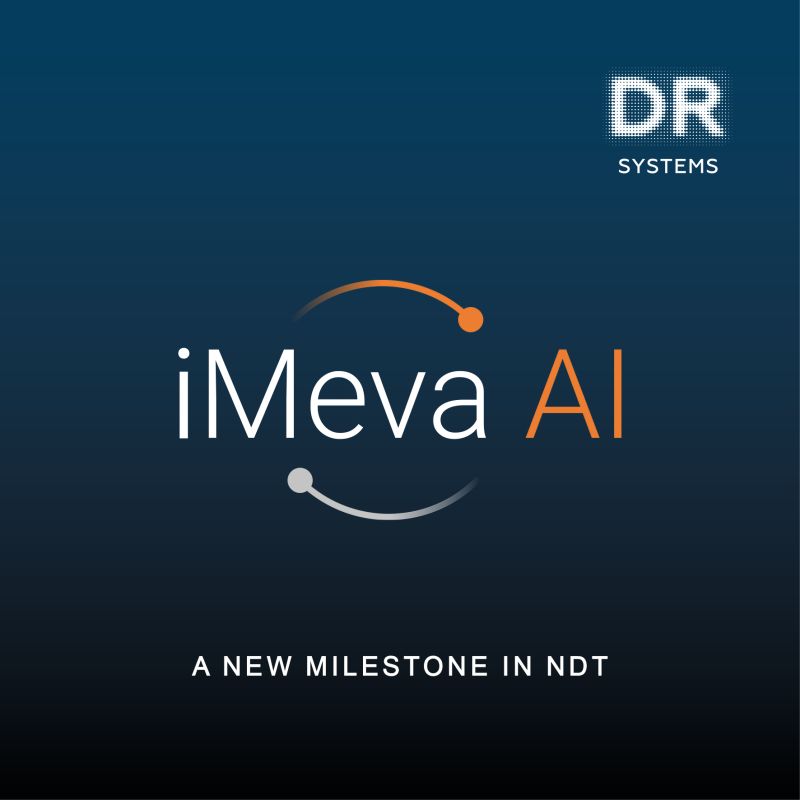
Connections, сonversations and innovations at ECNDT 2026! Thank you to everyone who visited our booth, attended our presentation and showed interest in our solutions. Meeting so many customers, partners and industry professionals, sharing ideas and discussing the future of NDT made this exhibition a truly rewarding experience for our team. This year's exhibition was especially memorable for us as we officially launched iMeva AI. The interest, questions and valuable feedback we received throughout the event made this milestone even more meaningful. A special thank you to our partners and distributors for their continued trust and support. We would also like to thank Trokut Test Group for their help with the delivery of our exhibition materials, and OnestopNDT for supporting the launch of iMeva AI and sharing the news with the wider NDT community. ECNDT once again provided a great opportunity to connect with industry professionals, exchange experience and explore new developments in NDT. Thank you, Verona. Thank you, ECNDT 2026.

At ECNDT 2026, DR SYSTEMS has introduced iMeva AI, bringing artificial intelligence into radiographic weld inspection workflows. The focus isn't replacing inspectors; it's helping them work through inspection data more efficiently and consistently. An interesting development for anyone following the growing role of AI in inspection. 📖 Read more: https://lnkd.in/d66vAv8G #onestopndt #NDT #NDE #ArtificialIntelligence #ECNDT2026 Olga Kosareva
Eid al-Adha is one of the most important holidays celebrated across the Muslim world, reflecting the values of unity, kindness and respect for one another. On this special occasion, we extend our warm wishes to everyone celebrating around the world. May this holiday bring peace, happiness and prosperity to you, and may the days ahead be filled with harmony and new achievements.


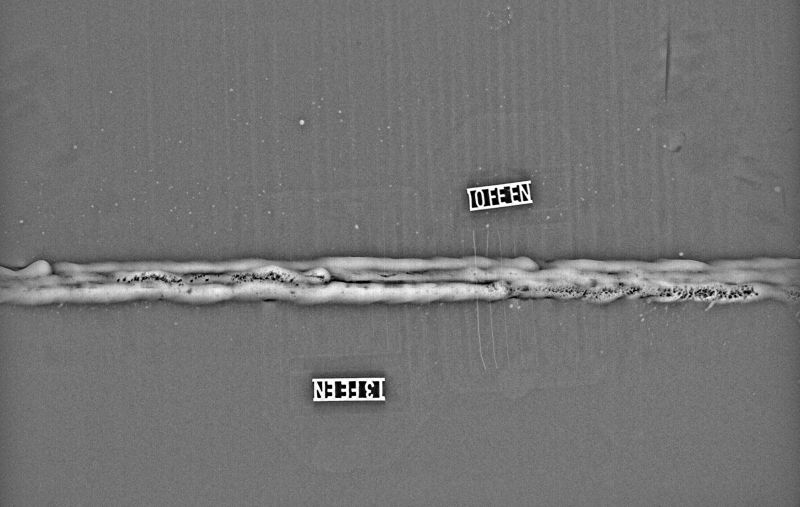
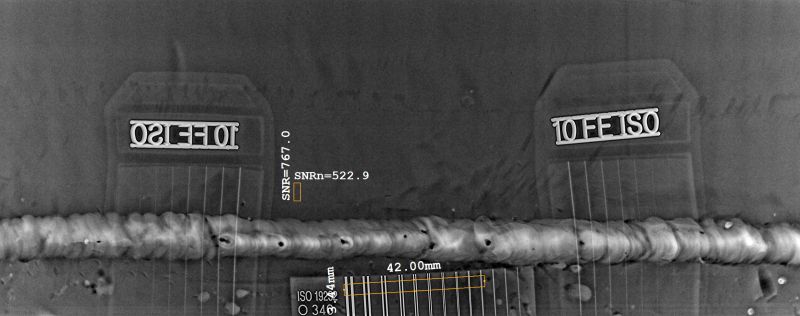
Another beautiful image of an ugly weld. Just because sharing properly-welded joints isn’t fun😁 - Object: steel plate, 11 mm wall thickness. - DR system: SCANRAY 3643 PRO. - Source: constant-potential X-ray generator. - Exposition time: 6 frames by 5 seconds (30 seconds total). - Scheme: SWSI. - Obtained sensitivity: 0.125 mm (exceeds ISO 17636-2 Class B requirements by 1 wire to compensate for 1 pair of Duplex wire IQI; class B requirements reached).
Today, we join those celebrating Buddha’s Birthday in South Korea and around the world. This day is associated with wisdom, compassion, harmony and mindfulness – values that continue to inspire people across cultures and generations. As a Korean company working with partners and customers worldwide, we would like to extend our warm wishes to everyone celebrating today. May this occasion bring peace, balance and positive moments to you and your loved ones.
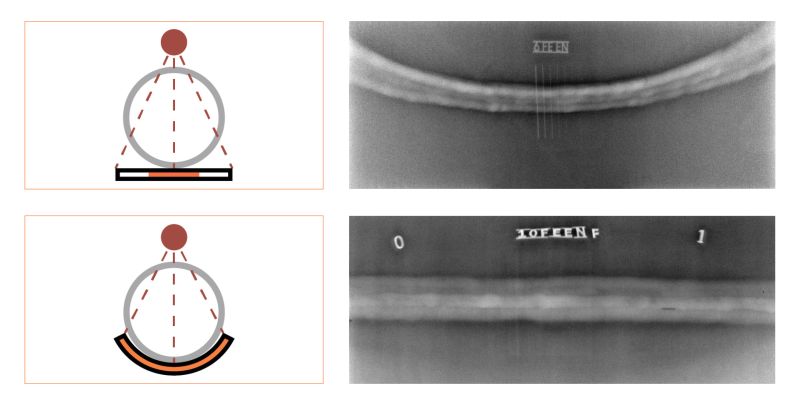
Eliminating geometric distortion with SCANRAY F. Not every digital detector uses the full active area effectively in all cases. When inspecting medium-size pipes with a flat panel, only the central area close to the contact zone can be taken for evaluation. As the detector surface moves further away from the pipe curvature, geometric distortion increases, image quality becomes less consistent across the radiograph and a smaller portion of the active area remains suitable for interpretation. In practice, this means more exposures are required to cover the entire weld length, often with large overlapping between images. SCANRAY F changes this approach completely. By adapting to the curvature of the object, the flexible detector maintains a much more consistent inspection geometry across the entire active area. As a result, the whole area of the radiograph becomes usable for evaluation, while SNRn remains consistently high throughout the image. That guarantees fewer exposures for the same NDT task, faster workflows and more efficient weld coverage. This advantage is especially noticeable on pipe diameters from 6” to 12” when using SCANRAY 1025F, and on diameters above 12” with SCANRAY 1043F. Another important advantage is the minimal thickness of the flexible detector itself, allowing SCANRAY F to be positioned in confined spaces where flat-panel systems are difficult or impossible to use. Applications such as boiler tube inspections become significantly more practical. Flexible detectors are not simply an alternative shape. In many cases, they fundamentally change testing efficiency, image usability and the overall process. Less distortion. Fewer exposures. Real advantages that directly impact productivity in the field.

Tired of average images and long exposure times? The real solution might not be where you expect. Quite often I hear: “The detector of this manufacturer isn’t good — I can’t achieve the required quality.” In reality, the panel itself is only part of the equation. Behind every excellent image, there are at least three key components: 1) Detector performance — from scintillator type and pixel pitch to overall mechanical and electronic stability, all of which define image consistency and artifact-free results. 2) Software capability — a powerful yet intuitive tool that bridges the hardware and the operator, directly impacting productivity and the ability to detect critical flaws. 3) Operator skill — built on knowledge, process understanding and real work experience. This is often underestimated, but even the most advanced DR system will not deliver top results on its own — it still depends on how it is used in the field. Remove any one of these elements, and the result will not meet expectations. Put an average car owner in a Formula-1 bolide, and he will smash it into the wall rather than win the race. Today’s image shows what the right combination looks like — a clear, reliable result achieved in seconds. Want the same outcome? Build the right balance with DR SYSTEMS. - Object: 8" steel pipe, 4 mm wall thickness. - DR system: SCANRAY 1043F. - Source: half-sine X-ray generator XXG-3005 by Dandong Aolong. - Exposition time: 15 frames by 1.5 seconds (22.5 seconds total). - Scheme: DWSI. - Obtained sensitivity: 0.1 mm (exceeds ISO 17636-2 Class B requirements by 1 wire).
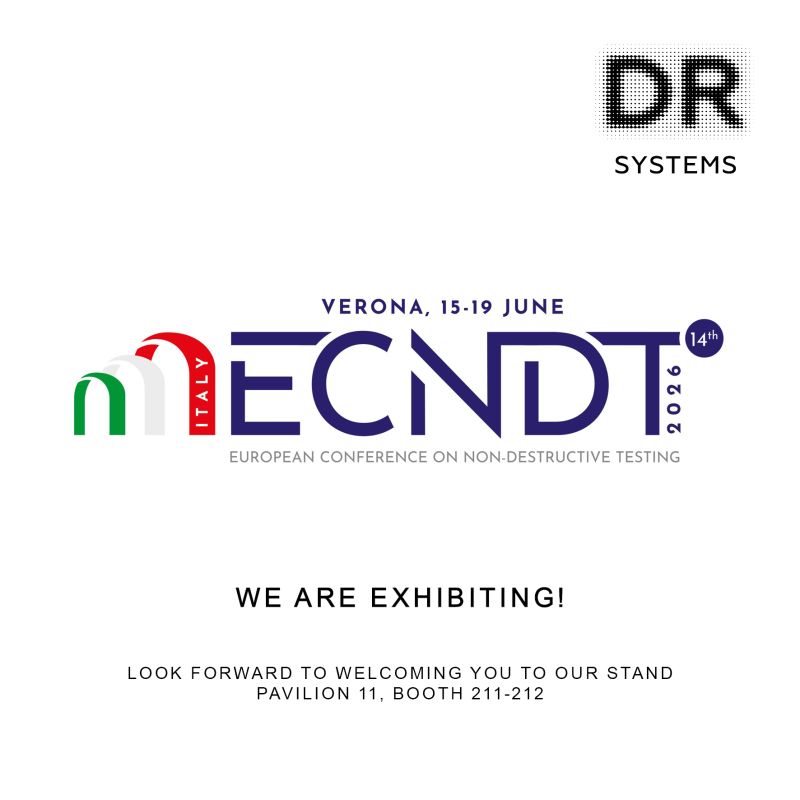
ECNDT 2026 - European Conference on Non-Destructive Testing is just around the corner, and we are ready to be part of it. It is a great opportunity to reconnect with the NDT community and explore how digital radiography continues to evolve in real working conditions. This year, we will present our latest developments, including iMeva AI – our new approach to AI-powered weld image evaluation, taking inspection from flaw detection to a structured final report. We will also be hosting a presentation on this topic by Mikhail Berdnikov on June 18, 14:40-15:00. Feel free to come by. At our stand, we will showcase DR solutions designed for real working conditions, with a focus on efficiency, consistency and practical usability. If you are looking to optimize your testing workflow or explore new approaches, we will be glad to discuss it with you. See you in Verona!

🔍 Donde otros no llegan, Yateks sí. Inspeccioná turbinas, tubos y espacios críticos sin desmontajes, con la precisión que exigen los ensayos no destructivos ⚙️🎥 ✔️ Imágenes en alta definición ✔️ Máxima maniobrabilidad en espacios reducidos ✔️ Detección de fallas en tiempo real ✔️ Ideal para mantenimiento y control de calidad Con los boroscopios y videoscopios Yateks, ganás tiempo, eficiencia y confiabilidad en cada inspección 💡 👉 Consultanos por una demo y llevá tus inspecciones al siguiente nivel. #Yateks #Videoscopio #Boroscopio #InspecciónIndustrial #END #MantenimientoIndustrial #ControlDeCalidad #Industria #Tecnología #OSHMA

Still struggling to scan curved pipes? 👀 Wrap. Scan. Detect. Flexible digital radiography = ZERO distortion on curved surfaces. From pipelines to aerospace, when failure isn’t an option, you need precision that delivers. ✔ Oil & Gas pipelines ✔ Tank inspections ✔ Industrial plants ✔ Shipbuilding & aerospace Detect internal defects BEFORE they become disasters. And the best part? What used to take hours… now takes minutes. ✅ Instant digital results ✅ Wireless imaging ✅ No film. No delays. Just decisions. Precision. Speed. Reliability. The future of NDT is flexible. 📩 DM “SCAN” to book your demo. #NDT #DigitalRadiography #OilAndGas #Engineering #InspectionTech #GNDT #DRSystems @drsystems
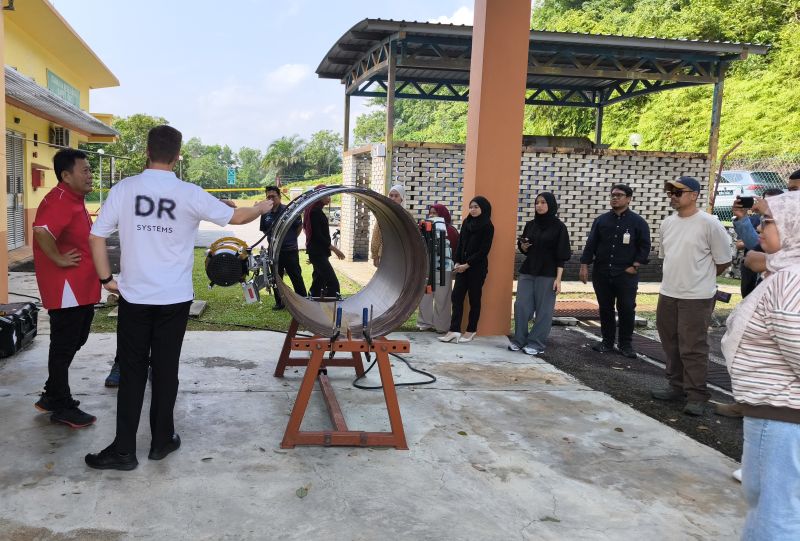
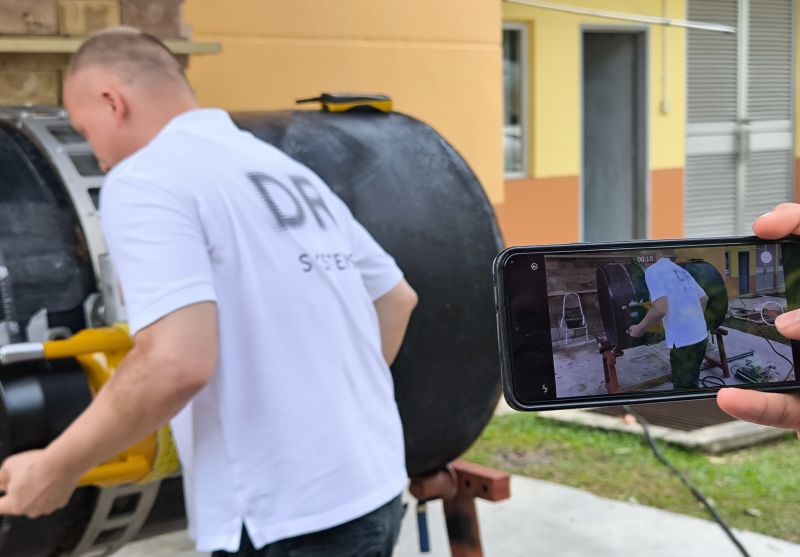
Even the most advanced digital radiography system will not deliver the best results without the right expertise behind it. That is why we place strong emphasis on training and technical support. At DR SYSTEMS, we conduct on-site training sessions tailored to specific customer tasks, equipment configurations and project requirements. During these sessions, we focus on practical application – explaining how to work with our systems in real conditions, how to get stable, high-quality images and which parameters truly make a difference in daily operation. We also share our accumulated experience and practical know-how, including important details that help avoid common mistakes and improve inspection results. This approach allows operators not only to understand the system but to use it confidently and efficiently in real work. Below is the video from a recent training session in Malaysia, focused on operating our XPRESS-SCAN DW automatic system. If you are looking to get the most out of your equipment through a dedicated training session for your team, we are always ready to support.

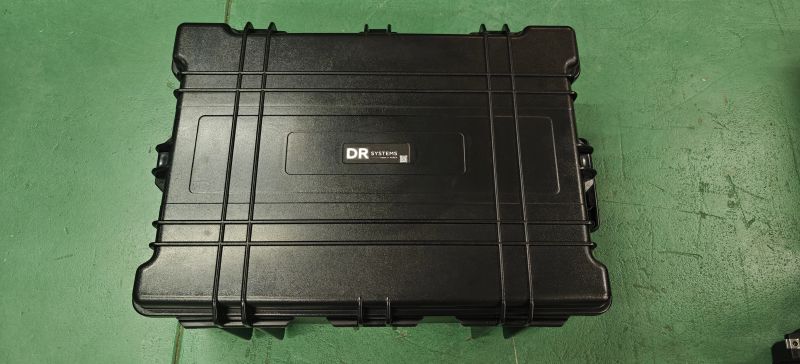
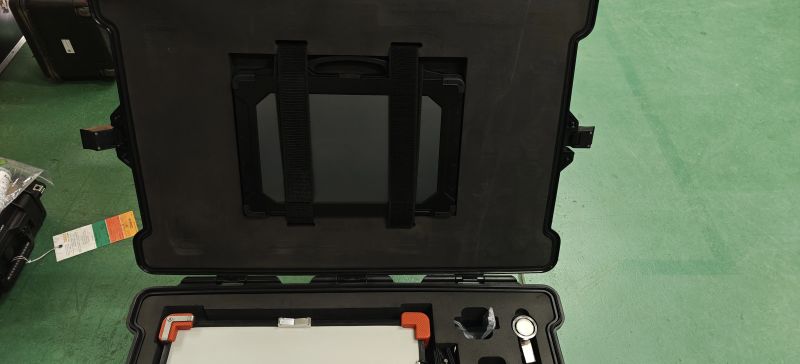
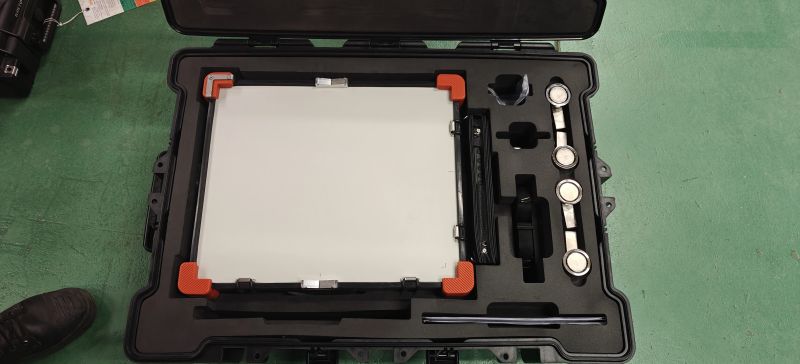
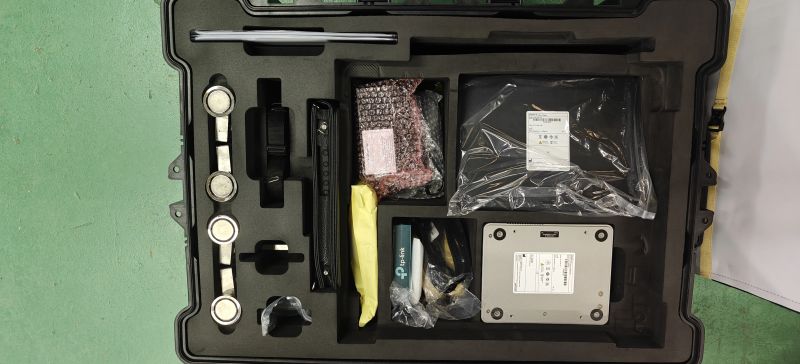
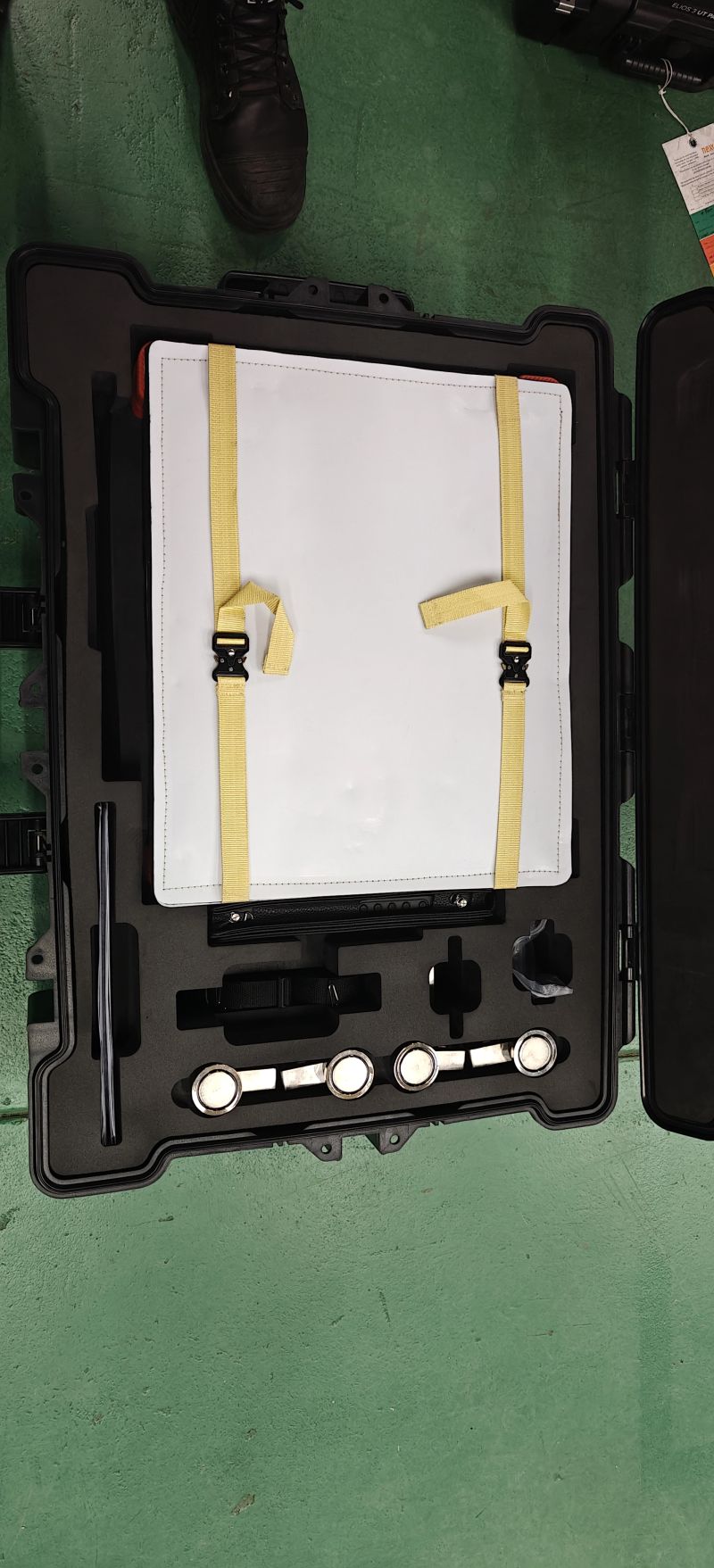
The first SCANRAY 3643 PRO has landed in Australia - and it earned its place the hard way. Our customer didn't take our word for it. They ran a proper comparison against the panels they already knew - Waygate and Carestream - the names that have been in NDT inspection rooms for decades. They looked at the images, studied the specs, tested the workflow and they chose the SCANRAY 3643 PRO. That 99 µm pixel pitch isn't just a number. In practice, it means the NDT tech sees what they need to see - the first time, every time. Finer defect detection. Fewer repeat shots. Faster sign-off. The panel triggers itself when radiation starts. No manual coordination, no missed shots, no second exposure for the crew with its Automatic Exposure Detection technique The heat resistant blanket and the docking station for the tablet are something unique here. Nevertheless to say, there is no subscription cost for the DR-SOFT® and all new updates are pushed free of charge to our customers who invest in Scanray products from DR Systems. We're proud to be the authorised distributor for DR Systems across Australia and New Zealand, and we're even prouder of what this first installation represents - a customer who did their homework, compared rigorously, and trusted the technology to deliver. If you're evaluating your DR panel options - for pipelines, oil & gas, corrosion under insulation (CUI), or general weld inspection, we are there to help. #NDT #DigitalRadiography #SCANRAY3643PRO #NonDestructiveTesting #DrSystems #Nexxis #AustraliaNDT #NewZealandNDT #OilAndGas #WeldInspection #IndustrialRadiography #DRPanel #CUI #PipelineInspection DR SYSTEMS Nexxis

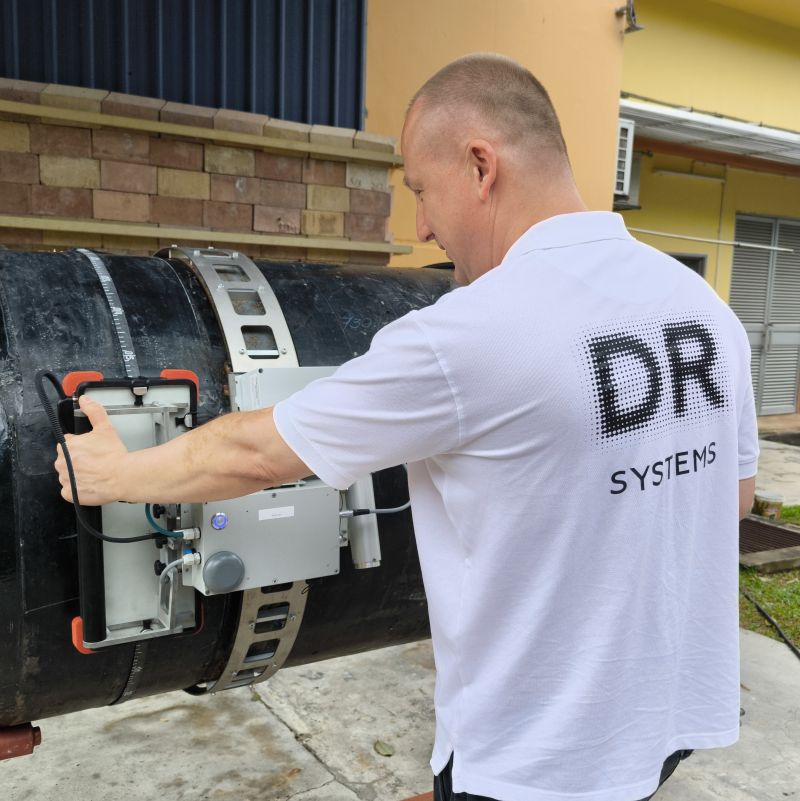
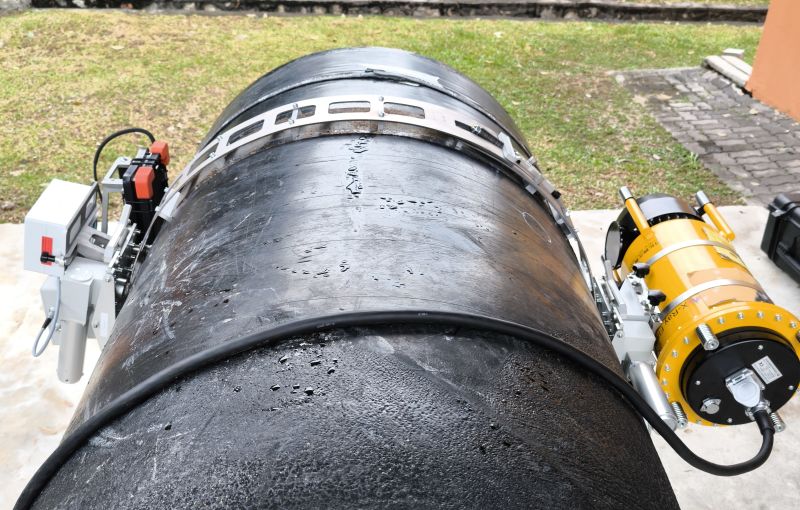
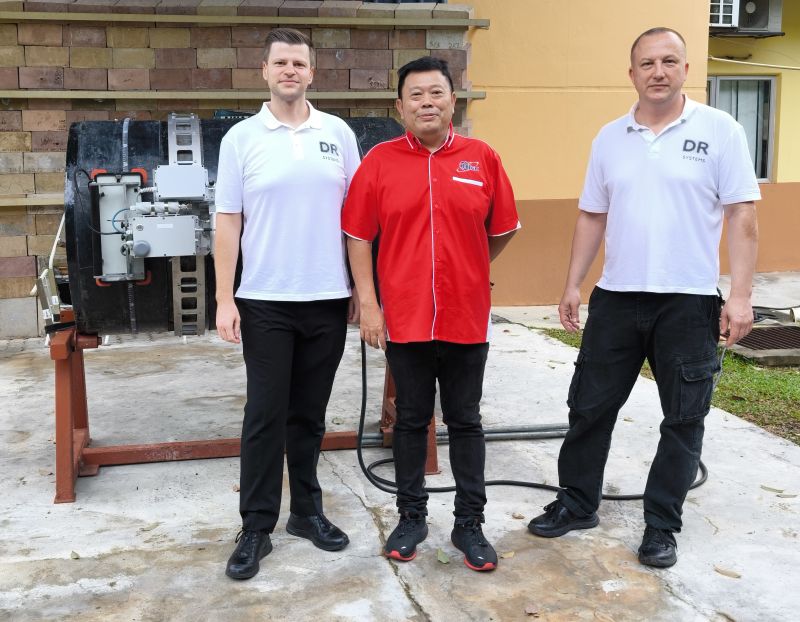
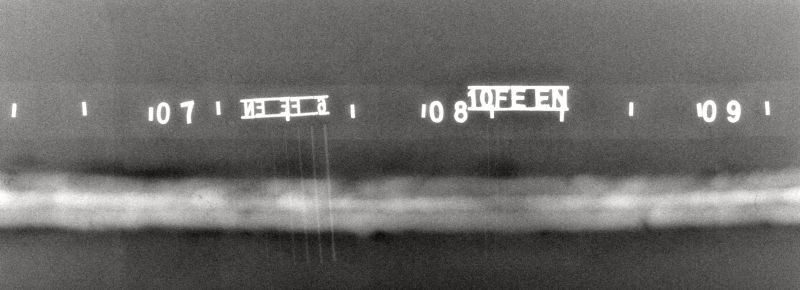
Today, we conducted a successful live demo of our DR SYSTEMS automatic pipeline weld inspection solution XPRESS-SCAN DW for PETRONAS and other potential customers in Malaysia. The event was kindly organized by our trusted partners, Altec Industrial and Engineering Supply Sdn Bhd and Kostec NDT Consultancy Sdn Bhd. An interesting detail of this demonstration was the use of a half-sine X-ray source from Dandong Aolong. Due to its operating cycle — up to 5 minutes of exposure followed by the same cooling time — the full circumferential scan took slightly longer than usual. Even so, we achieved an excellent full-weld image, with a productivity boost of up to three times that of the manual SCANRAY 1043F system and more than six times that of conventional film radiography. On large-scale pipeline projects, these savings quickly add up — turning into weeks or even months gained over the course of the job. Using the right technology doesn’t just improve inspection quality — it transforms into efficiency and project timelines. And the earlier the transition begins, the greater the long-term benefit. - Object: 36" steel pipe, 20 mm wall thickness. - DR system: XPRESS-SCAN DW with SCANRAY 1230. - Source: half-sine X-ray generator XXG-3005 by Dandong Aolong. - Scheme: DWSI. - Exposition time: 2 frames by 12 seconds (24 seconds total). - Number of expositions taken for the whole weld: 11. - Total operating time for the whole weld: 19 minutes (including 2 stops for the tube cooling). - Obtained sensitivity: 0.32 mm (exceeds the ASME requirements by 1 wire).

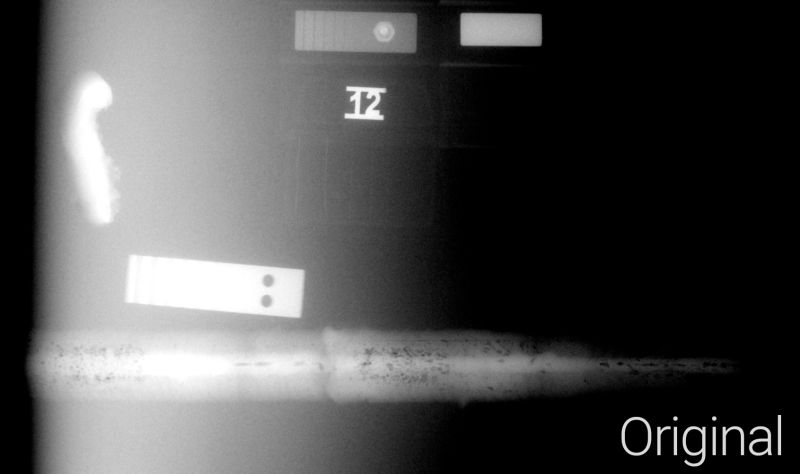
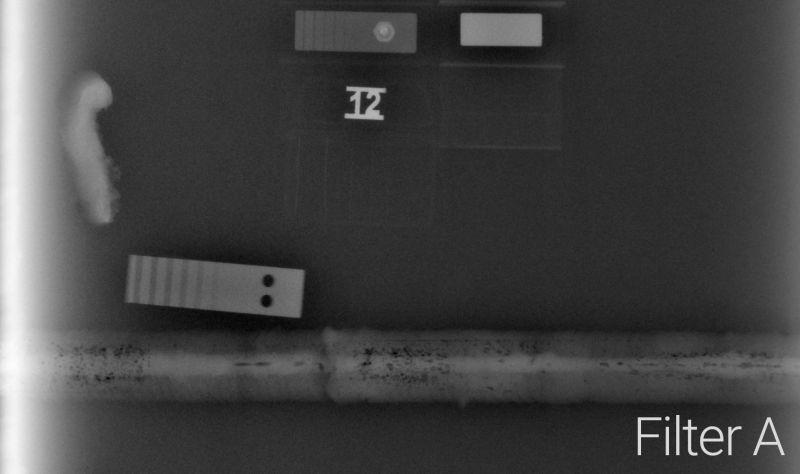
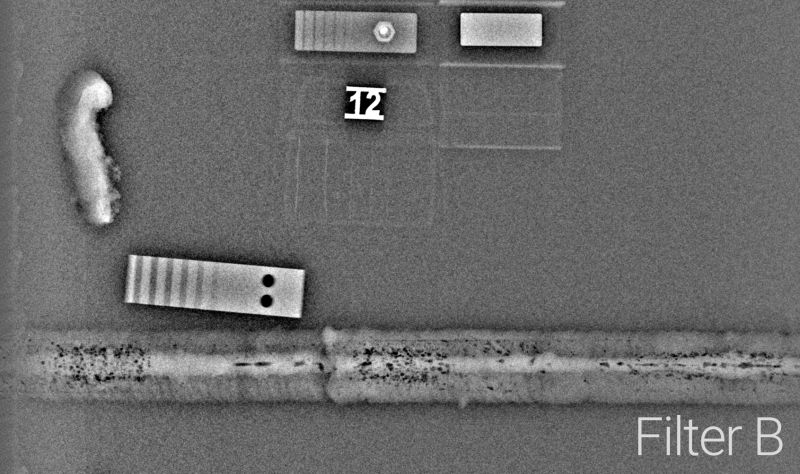
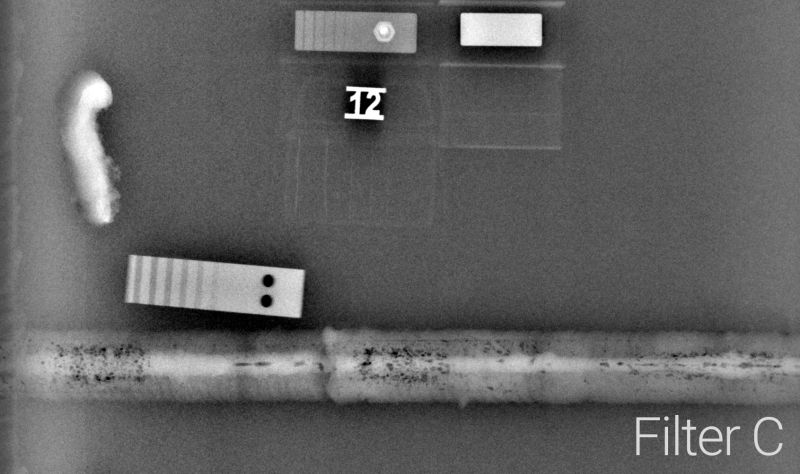
Filters in DR-SOFT – your helping hand for reliable results. Advanced image processing plays a key role in modern digital radiography, significantly simplifying daily inspection workflows. Well-designed filters help operators quickly navigate images, highlight subtle indications and bring potential defects into clear focus. This not only reduces the time required for analysis but also minimizes the risk of overlooking critical details, ultimately improving both testing quality and operator confidence. Even though we always advise performing the final decision-making about flaws on the original (raw) image, the filters serve as a powerful aid that enhances visibility and clarity. DR-SOFT includes three built-in filters designed to assist inspectors across a wide range of scenarios: – Filter A provides a soft, mild enhancement, making the image visually closer to conventional radiography and more familiar for operators transitioning from the film-based method. – Filter B applies strong contrast enhancement and is well-suited for rapid screening of welds, especially when using X-ray generators. It allows quick localization of potential indications, which can then be carefully evaluated and confirmed on the original image. In addition, this filter is useful for specific tasks such as tangential wall thickness assessment. – Filter C is optimized for high-energy sources such as Ir-192. It reduces the perceived “graininess” typical of such exposures, resulting in a cleaner and more readable image. In addition to filtering, DR-SOFT provides other powerful tools for localized image viewing adjustments. One of the most effective is a “magic wand” (Adjust LUT by rectangle), which enables precise correction of gray levels within a selected area. This allows the operator to enhance visibility of subtle details without altering the overall image characteristics. Also, switching between positive and negative display modes further improves visual perception and can be helpful in challenging cases. All of these instruments are included in DR-SOFT by default and do not require any additional payment. When used correctly, they do not replace standard evaluation practices, but make the testing process faster, more consistent and more efficient. If you would like to see how these tools perform in real inspection conditions, feel free to contact us. We will be happy to arrange a convenient time and walk you through the functionality in a live online session.
Connections, сonversations and innovations at ECNDT 2026! Thank you to everyone who visited our booth, attended our presentation and showed interest in our solutions. Meeting so many customers, partners and industry professionals, sharing ideas and discussing the future of NDT made this exhibition a truly rewarding experience for our team. This year's exhibition was especially memorable for us as we officially launched iMeva AI. The interest, questions and valuable feedback we received throughout the event made this milestone even more meaningful. A special thank you to our partners and distributors for their continued trust and support. We would also like to thank Trokut Test Group for their help with the delivery of our exhibition materials, and OnestopNDT for supporting the launch of iMeva AI and sharing the news with the wider NDT community. ECNDT once again provided a great opportunity to connect with industry professionals, exchange experience and explore new developments in NDT. Thank you, Verona. Thank you, ECNDT 2026.
At ECNDT 2026, DR SYSTEMS has introduced iMeva AI, bringing artificial intelligence into radiographic weld inspection workflows. The focus isn't replacing inspectors; it's helping them work through inspection data more efficiently and consistently. An interesting development for anyone following the growing role of AI in inspection. 📖 Read more: https://lnkd.in/d66vAv8G #onestopndt #NDT #NDE #ArtificialIntelligence #ECNDT2026 Olga Kosareva
Eid al-Adha is one of the most important holidays celebrated across the Muslim world, reflecting the values of unity, kindness and respect for one another. On this special occasion, we extend our warm wishes to everyone celebrating around the world. May this holiday bring peace, happiness and prosperity to you, and may the days ahead be filled with harmony and new achievements.
Another beautiful image of an ugly weld. Just because sharing properly-welded joints isn’t fun😁 - Object: steel plate, 11 mm wall thickness. - DR system: SCANRAY 3643 PRO. - Source: constant-potential X-ray generator. - Exposition time: 6 frames by 5 seconds (30 seconds total). - Scheme: SWSI. - Obtained sensitivity: 0.125 mm (exceeds ISO 17636-2 Class B requirements by 1 wire to compensate for 1 pair of Duplex wire IQI; class B requirements reached).
Today, we join those celebrating Buddha’s Birthday in South Korea and around the world. This day is associated with wisdom, compassion, harmony and mindfulness – values that continue to inspire people across cultures and generations. As a Korean company working with partners and customers worldwide, we would like to extend our warm wishes to everyone celebrating today. May this occasion bring peace, balance and positive moments to you and your loved ones.
Eliminating geometric distortion with SCANRAY F. Not every digital detector uses the full active area effectively in all cases. When inspecting medium-size pipes with a flat panel, only the central area close to the contact zone can be taken for evaluation. As the detector surface moves further away from the pipe curvature, geometric distortion increases, image quality becomes less consistent across the radiograph and a smaller portion of the active area remains suitable for interpretation. In practice, this means more exposures are required to cover the entire weld length, often with large overlapping between images. SCANRAY F changes this approach completely. By adapting to the curvature of the object, the flexible detector maintains a much more consistent inspection geometry across the entire active area. As a result, the whole area of the radiograph becomes usable for evaluation, while SNRn remains consistently high throughout the image. That guarantees fewer exposures for the same NDT task, faster workflows and more efficient weld coverage. This advantage is especially noticeable on pipe diameters from 6” to 12” when using SCANRAY 1025F, and on diameters above 12” with SCANRAY 1043F. Another important advantage is the minimal thickness of the flexible detector itself, allowing SCANRAY F to be positioned in confined spaces where flat-panel systems are difficult or impossible to use. Applications such as boiler tube inspections become significantly more practical. Flexible detectors are not simply an alternative shape. In many cases, they fundamentally change testing efficiency, image usability and the overall process. Less distortion. Fewer exposures. Real advantages that directly impact productivity in the field.
Tired of average images and long exposure times? The real solution might not be where you expect. Quite often I hear: “The detector of this manufacturer isn’t good — I can’t achieve the required quality.” In reality, the panel itself is only part of the equation. Behind every excellent image, there are at least three key components: 1) Detector performance — from scintillator type and pixel pitch to overall mechanical and electronic stability, all of which define image consistency and artifact-free results. 2) Software capability — a powerful yet intuitive tool that bridges the hardware and the operator, directly impacting productivity and the ability to detect critical flaws. 3) Operator skill — built on knowledge, process understanding and real work experience. This is often underestimated, but even the most advanced DR system will not deliver top results on its own — it still depends on how it is used in the field. Remove any one of these elements, and the result will not meet expectations. Put an average car owner in a Formula-1 bolide, and he will smash it into the wall rather than win the race. Today’s image shows what the right combination looks like — a clear, reliable result achieved in seconds. Want the same outcome? Build the right balance with DR SYSTEMS. - Object: 8" steel pipe, 4 mm wall thickness. - DR system: SCANRAY 1043F. - Source: half-sine X-ray generator XXG-3005 by Dandong Aolong. - Exposition time: 15 frames by 1.5 seconds (22.5 seconds total). - Scheme: DWSI. - Obtained sensitivity: 0.1 mm (exceeds ISO 17636-2 Class B requirements by 1 wire).
ECNDT 2026 - European Conference on Non-Destructive Testing is just around the corner, and we are ready to be part of it. It is a great opportunity to reconnect with the NDT community and explore how digital radiography continues to evolve in real working conditions. This year, we will present our latest developments, including iMeva AI – our new approach to AI-powered weld image evaluation, taking inspection from flaw detection to a structured final report. We will also be hosting a presentation on this topic by Mikhail Berdnikov on June 18, 14:40-15:00. Feel free to come by. At our stand, we will showcase DR solutions designed for real working conditions, with a focus on efficiency, consistency and practical usability. If you are looking to optimize your testing workflow or explore new approaches, we will be glad to discuss it with you. See you in Verona!
🔍 Donde otros no llegan, Yateks sí. Inspeccioná turbinas, tubos y espacios críticos sin desmontajes, con la precisión que exigen los ensayos no destructivos ⚙️🎥 ✔️ Imágenes en alta definición ✔️ Máxima maniobrabilidad en espacios reducidos ✔️ Detección de fallas en tiempo real ✔️ Ideal para mantenimiento y control de calidad Con los boroscopios y videoscopios Yateks, ganás tiempo, eficiencia y confiabilidad en cada inspección 💡 👉 Consultanos por una demo y llevá tus inspecciones al siguiente nivel. #Yateks #Videoscopio #Boroscopio #InspecciónIndustrial #END #MantenimientoIndustrial #ControlDeCalidad #Industria #Tecnología #OSHMA
Still struggling to scan curved pipes? 👀 Wrap. Scan. Detect. Flexible digital radiography = ZERO distortion on curved surfaces. From pipelines to aerospace, when failure isn’t an option, you need precision that delivers. ✔ Oil & Gas pipelines ✔ Tank inspections ✔ Industrial plants ✔ Shipbuilding & aerospace Detect internal defects BEFORE they become disasters. And the best part? What used to take hours… now takes minutes. ✅ Instant digital results ✅ Wireless imaging ✅ No film. No delays. Just decisions. Precision. Speed. Reliability. The future of NDT is flexible. 📩 DM “SCAN” to book your demo. #NDT #DigitalRadiography #OilAndGas #Engineering #InspectionTech #GNDT #DRSystems @drsystems
Even the most advanced digital radiography system will not deliver the best results without the right expertise behind it. That is why we place strong emphasis on training and technical support. At DR SYSTEMS, we conduct on-site training sessions tailored to specific customer tasks, equipment configurations and project requirements. During these sessions, we focus on practical application – explaining how to work with our systems in real conditions, how to get stable, high-quality images and which parameters truly make a difference in daily operation. We also share our accumulated experience and practical know-how, including important details that help avoid common mistakes and improve inspection results. This approach allows operators not only to understand the system but to use it confidently and efficiently in real work. Below is the video from a recent training session in Malaysia, focused on operating our XPRESS-SCAN DW automatic system. If you are looking to get the most out of your equipment through a dedicated training session for your team, we are always ready to support.
The first SCANRAY 3643 PRO has landed in Australia - and it earned its place the hard way. Our customer didn't take our word for it. They ran a proper comparison against the panels they already knew - Waygate and Carestream - the names that have been in NDT inspection rooms for decades. They looked at the images, studied the specs, tested the workflow and they chose the SCANRAY 3643 PRO. That 99 µm pixel pitch isn't just a number. In practice, it means the NDT tech sees what they need to see - the first time, every time. Finer defect detection. Fewer repeat shots. Faster sign-off. The panel triggers itself when radiation starts. No manual coordination, no missed shots, no second exposure for the crew with its Automatic Exposure Detection technique The heat resistant blanket and the docking station for the tablet are something unique here. Nevertheless to say, there is no subscription cost for the DR-SOFT® and all new updates are pushed free of charge to our customers who invest in Scanray products from DR Systems. We're proud to be the authorised distributor for DR Systems across Australia and New Zealand, and we're even prouder of what this first installation represents - a customer who did their homework, compared rigorously, and trusted the technology to deliver. If you're evaluating your DR panel options - for pipelines, oil & gas, corrosion under insulation (CUI), or general weld inspection, we are there to help. #NDT #DigitalRadiography #SCANRAY3643PRO #NonDestructiveTesting #DrSystems #Nexxis #AustraliaNDT #NewZealandNDT #OilAndGas #WeldInspection #IndustrialRadiography #DRPanel #CUI #PipelineInspection DR SYSTEMS Nexxis
Today, we conducted a successful live demo of our DR SYSTEMS automatic pipeline weld inspection solution XPRESS-SCAN DW for PETRONAS and other potential customers in Malaysia. The event was kindly organized by our trusted partners, Altec Industrial and Engineering Supply Sdn Bhd and Kostec NDT Consultancy Sdn Bhd. An interesting detail of this demonstration was the use of a half-sine X-ray source from Dandong Aolong. Due to its operating cycle — up to 5 minutes of exposure followed by the same cooling time — the full circumferential scan took slightly longer than usual. Even so, we achieved an excellent full-weld image, with a productivity boost of up to three times that of the manual SCANRAY 1043F system and more than six times that of conventional film radiography. On large-scale pipeline projects, these savings quickly add up — turning into weeks or even months gained over the course of the job. Using the right technology doesn’t just improve inspection quality — it transforms into efficiency and project timelines. And the earlier the transition begins, the greater the long-term benefit. - Object: 36" steel pipe, 20 mm wall thickness. - DR system: XPRESS-SCAN DW with SCANRAY 1230. - Source: half-sine X-ray generator XXG-3005 by Dandong Aolong. - Scheme: DWSI. - Exposition time: 2 frames by 12 seconds (24 seconds total). - Number of expositions taken for the whole weld: 11. - Total operating time for the whole weld: 19 minutes (including 2 stops for the tube cooling). - Obtained sensitivity: 0.32 mm (exceeds the ASME requirements by 1 wire).
Filters in DR-SOFT – your helping hand for reliable results. Advanced image processing plays a key role in modern digital radiography, significantly simplifying daily inspection workflows. Well-designed filters help operators quickly navigate images, highlight subtle indications and bring potential defects into clear focus. This not only reduces the time required for analysis but also minimizes the risk of overlooking critical details, ultimately improving both testing quality and operator confidence. Even though we always advise performing the final decision-making about flaws on the original (raw) image, the filters serve as a powerful aid that enhances visibility and clarity. DR-SOFT includes three built-in filters designed to assist inspectors across a wide range of scenarios: – Filter A provides a soft, mild enhancement, making the image visually closer to conventional radiography and more familiar for operators transitioning from the film-based method. – Filter B applies strong contrast enhancement and is well-suited for rapid screening of welds, especially when using X-ray generators. It allows quick localization of potential indications, which can then be carefully evaluated and confirmed on the original image. In addition, this filter is useful for specific tasks such as tangential wall thickness assessment. – Filter C is optimized for high-energy sources such as Ir-192. It reduces the perceived “graininess” typical of such exposures, resulting in a cleaner and more readable image. In addition to filtering, DR-SOFT provides other powerful tools for localized image viewing adjustments. One of the most effective is a “magic wand” (Adjust LUT by rectangle), which enables precise correction of gray levels within a selected area. This allows the operator to enhance visibility of subtle details without altering the overall image characteristics. Also, switching between positive and negative display modes further improves visual perception and can be helpful in challenging cases. All of these instruments are included in DR-SOFT by default and do not require any additional payment. When used correctly, they do not replace standard evaluation practices, but make the testing process faster, more consistent and more efficient. If you would like to see how these tools perform in real inspection conditions, feel free to contact us. We will be happy to arrange a convenient time and walk you through the functionality in a live online session.